
EV Charging for Commercial Properties: Design the Service Around the Asset
Freeze parking, power, meter, access, operations and expansion boundaries before a charger shortlist becomes a property commitment.
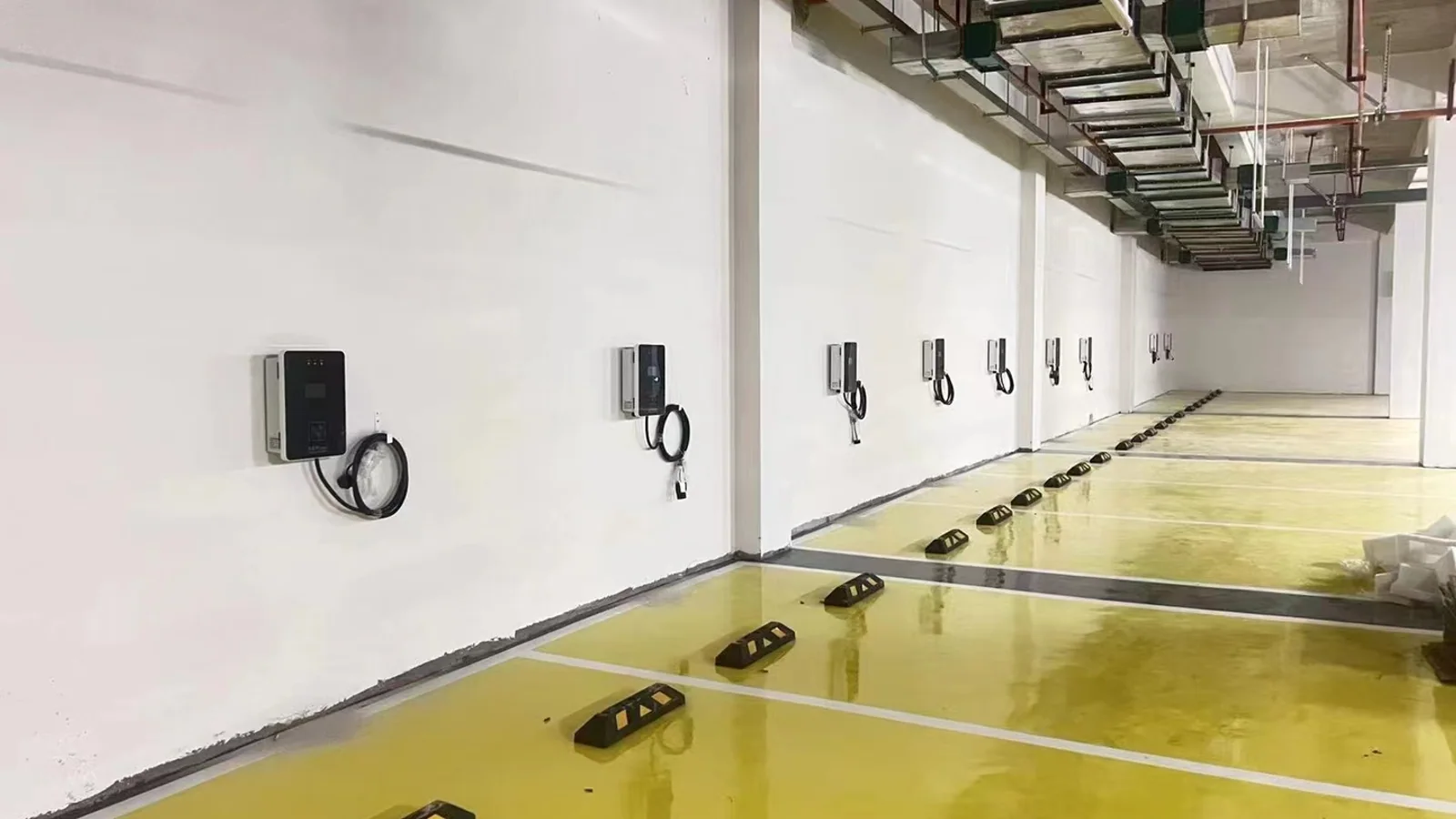
Effective EV charging solutions for commercial properties begin with a service design, not a charger rating. That design must connect six boundaries: users and vehicles, parking rights, dwell and energy need, electrical service and metering, access and payment, and the owner of ongoing operations. If one boundary is unresolved, a product shortlist cannot repair the gap.
That distinction matters across offices, retail centres, hotels, mixed-use developments, industrial sites and leased properties. Two buildings with the same number of parking spaces may require entirely different solutions. One may need many managed AC ports for employees parked all day. Another may need fewer DC ports for visitors who stay less than an hour. A third may need a mixed system because tenants, customers and fleet vehicles use the same property at different times.
This guide gives property owners, asset managers, developers and facilities teams a structured way to define that service before requesting charger quotations. It does not promise that charging will increase rent, attract tenants or produce a particular return. Those are hypotheses that must be tested with the property’s own demand, tariff, lease and operating data.
Executive decision: freeze the property, power, access, payment, operating and expansion boundaries before choosing the equipment. A charger specification cannot repair an unresolved lease, meter or service-responsibility problem.
Start with the property service, not charger power
Commercial-property conversations often begin with “How many kilowatts?” That question is downstream of the real brief.
Begin with the charging job:
- Who will use the service: employees, tenants, residents, hotel guests, retail visitors, fleet vehicles or the general public?
- Which parking spaces can legally and operationally be assigned to charging?
- How long do vehicles normally remain at the property?
- How much energy do they need before they leave?
- Which entity owns the electrical service and pays the utility bill?
- Will access be free, restricted, reimbursed, billed or publicly paid?
- Who owns the charger, network account, transaction data and support obligation?
- What happens when a lease ends, a tenant changes or the operator is replaced?
The U.S. Department of Energy’s commercial-building charging resource treats the building distribution system, infrastructure upgrades, networking, metering, utility arrangements and ownership as connected considerations. Its infrastructure-development checklist also places site selection, utility engagement, payment, ownership, permitting, maintenance and future expansion in the planning scope.
That is why a commercial-property charging bay should be treated as an energy-service unit, not just a parking space with a socket.
Route the property archetype before choosing AC or DC
The property type does not determine the answer by itself, but it provides the first useful routing hypothesis.
| Property archetype | Primary users | Typical dwell pattern | Likely access model | First design question |
|---|---|---|---|---|
| Office / workplace | Employees, visitors, fleet | Several hours; recurring | Employee groups, reservations, visitor exceptions | Can lower-power ports meet daily energy needs through long dwell and managed sharing? |
| Retail / mixed-use | Shoppers, staff, tenants, public | Short to medium; variable peaks | Public payment plus private groups | Does charging support the visit window without turning bays into long-stay parking? |
| Hotel / hospitality | Overnight guests, events, staff | Overnight plus event peaks | Guest validation, public or account-based | Can guest, event and staff policies share the same parking inventory? |
| Industrial / fleet-linked | Fleet, employees, contractors | Scheduled shifts and operational windows | Private fleet and authorised users | What energy must each vehicle receive before its next dispatch? |
| Multi-tenant leased property | Multiple tenants and visitors | Mixed and contract-dependent | Tenant allocation, reimbursement or public access | Who controls spaces, pays make-ready costs and owns assets at lease exit? |
| Public-facing destination | General public and customers | Short, uncertain and demand-led | Ad hoc payment and network visibility | Who provides uptime monitoring, help, payment recovery and field response? |
This is a starting map, not a rule. An office with a taxi tenant may need a different power mix from a conventional workplace. A hotel beside a highway may have a public fast-charging use case in addition to overnight guest charging. A retail centre may use AC for staff and DC for visitors.
For detailed AC sizing, use the commercial Level 2 EV charger guide. For detailed DC site engineering, use the DC fast charger station guide. This article keeps the decision at the property-service level.
Close every boundary before selecting equipment
→
→
→
→
→
Each link needs one named owner, one input document, one acceptance test and one escalation path.
The Property-to-Port Chain
A workable commercial-property solution must close every link in this chain:
Occupant and vehicle → parking right → dwell and energy job → electrical and meter boundary → access and payment → operating owner
1. Occupant and vehicle
Define user groups separately. “Tenants” may include office commuters, company fleets and visitors. “Customers” may include repeat account holders and one-time drivers. Record vehicle types, connector expectations, arrival windows and the energy needed to complete the next trip.
Do not convert a count of interested drivers directly into a charger count. Interest, parking occupancy, charging need and simultaneous demand are different datasets.
2. Parking right
Identify who controls each proposed bay and during which hours. A property owner may own the land but delegate parking operations. A tenant may control spaces under a lease but not have permission to alter electrical infrastructure. Accessible parking, loading, fire access and local planning rules can constrain the usable layout.
The acceptance test is not “space appears available.” It is a documented site plan and authority matrix showing who can assign, alter and enforce use of the space.
3. Dwell and energy job
For each user group, record:
- arrival and departure distribution;
- expected starting state of charge or daily energy deficit;
- minimum departure energy requirement;
- vehicle acceptance limits;
- whether vehicles can be moved after charging;
- required service days and seasonal peaks.
This converts vague demand into port-hours and energy-delivery requirements.
4. Electrical and meter boundary
Locate the utility point of connection, transformer, main switchboard, sub-distribution, proposed feeder route and meter ownership. Obtain measured load profiles rather than relying only on the service nameplate. Identify which entity receives the bill and whether a new meter, submeter or tariff is possible.
5. Access and payment
Specify who can start a session, how identity is confirmed and how exceptions are handled. Access may use open payment, an app, RFID, plug-and-charge capability, licence-plate integration, a reservation system or a private fleet account. The property also needs rules for idle bays, overstays, visitors, refunds and failed authorisation.
6. Operating owner
Name the organisation responsible for remote monitoring, incident intake, customer support, field response, cleaning, inspection, spare parts, software, network accounts, payment settlement and reporting. “The vendor” is not an owner unless the contract names the entity, scope, response obligation and evidence.
The Property-to-Port Chain is complete only when each link has:
- a named owner;
- an input document;
- an acceptance test;
- an escalation path.
Make every proposal price the same project
Freeze six boundaries before requesting proposals
If bidders receive different assumptions, their quotations will not be comparable. Freeze these six boundaries in the request for proposal.
Boundary 1: property and parking
Provide a controlled drawing showing property lines, parking ownership, traffic routes, bay dimensions, accessible routes, entrances, fire lanes, drainage, lighting, security coverage and civil-work restrictions. State construction hours and landlord approvals.
For leased assets, record who may approve trenching, wall penetrations, signage, bollards and changes to parking allocation. Include reinstatement obligations at lease end.
Boundary 2: electrical service and metering
Provide the single-line diagram, transformer and switchboard data, protection information, measured demand profile, tariff, meter ownership and preliminary feeder route. State whether the proposal includes utility applications, transformer or switchgear changes, cabling, civil works and commissioning.
Load management can control an agreed charging envelope, but it should not be assumed to eliminate an upgrade. The electrical engineer and utility must confirm capacity, protection, power quality and connection requirements.
Boundary 3: users and access
List each group—employee, tenant, guest, customer, visitor, public user, contractor and fleet—and define authorised hours, priority, reservation, sharing, overstay and enforcement rules.
The DOE’s workplace charging guidance highlights the need for administration, sharing, access, pricing and enforcement policies. It also notes that charging in leased facilities requires negotiation with the building owner.
Boundary 4: payment, data and network accounts
State whether charging is free, reimbursed, allocated internally or billed to drivers. Define who is merchant of record, who sets tariffs, who carries transaction fees, who handles refunds and how taxes or electricity-resale rules are checked.
Define data ownership and export. At minimum, decide who can access asset status, session records, energy data, faults, firmware history and payment reconciliation. If the backend provider changes, specify the process for account, configuration and data transfer. Protocol support such as OCPP can be an important procurement consideration, but version, feature profile, security configuration and backend compatibility must be verified for the exact charger and software combination.
Boundary 5: operations, maintenance and recovery
Separate the service into accountable tasks:
- remote status and alert monitoring;
- first-line user support;
- remote diagnostics and resets;
- site inspection, cleaning and cable management;
- field fault response;
- parts inventory and replacement;
- firmware and security updates;
- payment and communications recovery;
- recurring safety checks;
- performance reporting and root-cause review.
The Joint Office’s reliability material makes clear that reliable charging depends on more than the physical charger: monitoring, diagnostics, maintenance, support, spare parts and software management all contribute to the service.
Boundary 6: expansion, lease exit and asset transfer
“Future-ready” is too vague for a contract. Replace it with explicit provisions:
- spare conduits and draw pits;
- reserved switchboard space;
- transformer and feeder expansion assumptions;
- data and network capacity;
- foundations or mounting zones;
- modular power or dispenser provisions where relevant;
- trigger points for adding ports or power;
- ownership of equipment and accounts at lease expiry;
- de-installation, relocation and reinstatement duties.
The result is a scope that bidders can price against the same physical and operating boundary.
Diagnose the boundary before comparing quotations
| Early symptom | Likely property-level cause | Verification | Corrective action |
|---|---|---|---|
| Quotations differ dramatically even when port counts match | Bidders priced different electrical, civil, network or operating boundaries | Issue the same Six Boundary Freeze and require assumptions and exclusions | Recompare only after each bidder returns a boundary-complete scope |
| “The building has spare capacity” but no interval data is available | Service nameplate has been mistaken for usable charging capacity | Review measured load, single-line data, tariff and utility constraints | Define an engineered charging envelope and its evidence source |
| “The network will handle support” | Backend access has been confused with complete service ownership | Map monitoring, help desk, field response, spares and account control | Name one owner and closure record for every recovery task |
| “More ports can be added later” without a drawing | Expansion has no physical, electrical or contractual reservation | Review conduits, switchboard space, control capacity and lease rights | Put explicit make-ready quantities and expansion triggers in the first phase |
Choose AC, DC or a mixed system from the energy job
Power should be derived from energy need and dwell, then checked against the vehicle and property ceilings.
A useful first calculation is:
average power needed at the vehicle = required delivered energy ÷ effective charging window
If a vehicle needs 24 kWh during a six-hour effective window, the simple average at the vehicle is 4 kW. That is not yet a charger specification. Apply charging losses, vehicle acceptance, temperature, sharing, arrival diversity and reserve margin before engineering the system. The example only shows why a long dwell window can change the answer.
For multiple ports, define:
- energy required per user group per operating period;
- number of simultaneously connected vehicles;
- minimum guaranteed power, if any;
- maximum site charging envelope;
- allocation logic when demand exceeds that envelope;
- recovery behaviour after communications or controller failure.
When managed AC is often worth evaluating
Managed AC charging is a strong candidate when vehicles remain for several hours, the energy deficit is moderate, users can share or queue and the property wants broader parking coverage within a controlled load envelope. Offices, hotels and long-dwell mixed-use assets often warrant this evaluation.
When DC is often worth evaluating
DC charging is a candidate when the required energy must be delivered within a shorter window, vehicles have high daily energy needs, turnover matters or fleet departure times are operationally binding. The commercial charger buyer guide and Level 3 terminology guide explain how to translate the label into a usable specification.
When a mixed system is rational
A mixed system can separate service jobs: AC for employees or overnight guests; DC for short-stay visitors, fleet exceptions or rapid turnaround. The two systems should still share a coordinated electrical, metering, communications and operating plan.
Do not publish a universal AC-to-DC ratio. Derive it from the property’s dwell, energy, turnover, access and operating evidence.
Pause procurement when the property boundary is still unresolved
Do not make the charger the first purchase when any of these conditions remains open:
- the property or tenant cannot document control of the proposed bays;
- the electrical assessment relies on a nameplate rather than measured load and a controlled single-line diagram;
- the utility account, meter, tariff or energy-cost allocation has no owner;
- access, payment, data and network-account responsibilities are still described only as “the platform”;
- no party accepts first-line support, field response and closure evidence; or
- the expansion and lease-exit plan depends on unspecified “future-ready” infrastructure.
These are stop conditions, not reasons to abandon the project. Resolve them before equipment choice turns uncertainty into fixed scope.

Treat electrical capacity as a managed property resource
The building’s spare capacity is not one static number. Charging demand interacts with elevators, HVAC, kitchens, refrigeration, tenant loads, process equipment and seasonal peaks. A nameplate assessment alone can conceal both constraints and usable off-peak capacity.
Build the electrical brief around:
- interval data for the existing building load;
- the proposed charging energy and concurrency profile;
- transformer, switchboard, feeder and protective-device limits;
- tariff and demand-charge structure;
- utility connection and upgrade lead time;
- the minimum service that must remain available during controller or network failure;
- the expansion scenario.
Load management should be specified as a control contract, not a marketing feature. Define the measured control point, site limit, update interval, allocation priorities, fallback state, loss-of-communications behaviour, audit data and manual override authority.
Make-ready can be a separate investment stage
Some properties should install routes, conduits, switchboard provisions or capacity before deploying every planned port. The EU’s Energy Performance of Buildings Directive, for example, includes recharging-point, pre-cabling, ducting and smart-charging provisions for certain non-residential buildings.
That is an EU planning example, not a global specification. Property teams must verify the applicable national transposition, dates, building definitions, parking thresholds and exemptions. The broader lesson is durable: civil and electrical pathways should be decided with the future port plan, not rediscovered after the finished property is occupied.
Resolve lease, meter, access, payment and data ownership
Commercial-property charging crosses organisational boundaries. A clear responsibility matrix should accompany the technical design.
| Responsibility | Property owner | Tenant / fleet | Parking operator | CPO / service operator | Equipment supplier / contractor |
|---|---|---|---|---|---|
| Parking-space authority | Usually approves base allocation | May control leased bays | Enforces daily use | May receive designated bays | Works within approved layout |
| Utility and meter | Often owns or controls account | May reimburse or hold sub-account | Usually limited | May hold separate supply in some models | Supplies meter/interface data as scoped |
| Charger asset | May own | May own under lease | Uncommon | May own in third-party model | Manufactures/supplies; ownership is contractual |
| Access policy | Approves property rules | Defines authorised users | Enforces parking rules | Configures platform rules | Implements supported functions |
| Payment and settlement | May set commercial policy | May reimburse users | May integrate parking payment | Often operates payment service | Supplies compatible hardware only if scoped |
| Network account and data | Must secure access/exit rights | Needs agreed reports | Needs enforcement data | Operates backend/account | Provides supported interface and documentation |
| Field maintenance | Maintains property-side assets | Reports issues | Inspects bays | Coordinates SLA | Provides parts/technical support as contracted |
The table is illustrative; actual roles depend on the destination and contract.
Before signing a lease amendment or service agreement, answer:
- Who pays for make-ready work and who owns it?
- Is the charger a tenant improvement, landlord asset or operator asset?
- Who carries energy, network and transaction costs?
- Can the tenant remove equipment?
- Who restores the building and parking area?
- Can the network account and data be transferred?
- What happens to prepaid balances or user accounts?
- Who remains responsible for faults after the tenant leaves?
The World Bank’s charging-ecosystem report describes site-host arrangements in which landowners may lease space to a CPO or take on a CPO role themselves. The choice changes control, capital, data and operating responsibility; it does not guarantee a particular financial result.

Design charging bays for real use, not a plan-view symbol
A charger icon placed beside a parking rectangle is not a complete user journey. Verify:
- vehicle approach and departure;
- charger visibility and signage;
- safe pedestrian routes;
- accessible route and manoeuvring space;
- connector reach to different inlet positions;
- cable weight, storage and trip hazards;
- screen, controls and payment-interface reach;
- lighting and personal security;
- impact protection;
- weather, heat, drainage, flooding, snow or dust exposure;
- mobile or wired connectivity;
- access for inspection and service;
- queuing and overflow behaviour.
The U.S. Access Board’s design recommendations explain why an EV charging space differs from an ordinary parking space: the driver may need to move around the vehicle, reach different inlet locations and handle a cable and connector. The document distinguishes existing legal requirements from additional non-binding recommendations. Use it as a technical reference, then confirm the binding accessibility rules for the project’s jurisdiction.
For public-facing properties, the service must also cover discovery, ad hoc access, payment, help and recovery. Those topics are developed in the public EV charging stations guide.
Choose an operating model by responsibility, not by slogan
There are many commercial variants, but three simplified models expose the decision.
Model A: site host owns and operates
The property controls the equipment, accounts, policies, data and operating contracts. This can preserve flexibility, but the site host must assemble monitoring, payment, support, maintenance, security and reporting capabilities.
Model B: site host owns, specialist operates
The property owns the infrastructure while a CPO or service provider operates the platform and/or field service. Define data access, network portability, parts, response obligations, renewal terms and exit assistance. Hardware ownership alone does not guarantee operational control.
Model C: third party owns and operates
The property grants space and electrical/site rights to a third party that owns and operates the charging assets. This can reduce the property’s direct operating scope, but it creates dependencies around term, site access, branding, energy supply, data, performance, removal and reinstatement.
Use the EV charging station business guide to build the separate demand, revenue, cost and responsibility ledgers. Use the commercial DC fast charger cost guide to define what a quote includes and excludes. Neither page should be replaced by a generic claim that one ownership model is automatically cheaper or more profitable.
Specify reliability as responsibilities and evidence
An operating charger is a chain of power, hardware, vehicle communication, network, account, authorisation, payment and field support. Procurement should define how evidence moves through that chain.
Use this incident pattern:
Asset ID → timestamped event → diagnostic evidence → responsible owner → required action → closure proof
An operating scope should identify:
- unique charger, port, connector, meter and network identifiers;
- status and fault data available remotely;
- alert routing and acknowledgement;
- first-line and technical escalation;
- remote-recovery actions and permissions;
- field-response coverage and access;
- spare-parts location and replenishment;
- firmware approval and rollback;
- payment and communications recovery;
- closure evidence and recurring-fault analysis.
Commissioning and handover pack
Require a controlled pack that can be used by people who did not build the project:
- approved drawings and single-line diagram;
- asset and serial-number register;
- protection settings and test records;
- charger configuration and firmware record;
- network and account ownership record;
- meter and payment reconciliation test;
- representative vehicle/session tests;
- access-group and tariff tests;
- emergency, isolation and recovery procedures;
- administrator and operator training;
- warranty, spares and support contacts;
- defect list, owner and closeout evidence.
Product certification and project acceptance are not the same thing. Review applicable evidence for the exact destination and configuration on HG Power’s certifications page and request configuration-specific documents rather than assuming a family claim applies to every SKU.
Scale evidence—not assumptions
→
→
→
Scale through a Portfolio Rollout Ladder
Copying one charger layout across every property can scale the original assumptions and mistakes. Use four controlled stages.
Stage 1: passive readiness
Protect routes, space, electrical strategy and data/communications provisions. Record the future service assumptions even if ports are not yet installed.
Stage 2: measured pilot
Choose a controlled user group and write the hypotheses before opening:
- expected connection and energy demand;
- arrival and departure distribution;
- sharing or overstay behaviour;
- electrical peak impact;
- payment or access success;
- support demand;
- maintenance events.
Set the review date and decision thresholds. A pilot without a hypothesis becomes an anecdote.
Stage 3: controlled operation
Stabilise policy, monitoring, support, fault recovery and reporting. Resolve recurring issues before adding sites.
Stage 4: repeatable portfolio standard
Create approved property archetypes, drawings, charger/interface requirements, role matrices, data definitions, acceptance scripts and change-control rules. Allow documented exceptions instead of forcing every asset into one template.
This ladder helps a portfolio learn from measured operation while preserving a route to expansion.
Commercial Property Charging Freeze Pack
Provide these inputs before requesting an equipment and integration proposal.
Asset and parking
- Property type, location and operating hours.
- Ownership, lease and parking-control parties.
- Controlled parking/site plan.
- Proposed and future bay counts.
- Civil, fire, accessibility and construction constraints.
Users and charging job
- User groups and vehicle classes.
- Arrival/departure distributions.
- Energy required before departure.
- Vehicle connector and charging limits.
- Sharing, reservation and overstay policy.
Power and meter
- Utility point, tariff and account owner.
- Single-line diagram and equipment ratings.
- Measured interval load data.
- Preliminary feeder and communications route.
- Current and future charging envelope.
- Load-management control point and fallback rule.
Access, payment and data
- Private, tenant, fleet, visitor or public access groups.
- Authentication and exception journey.
- Pricing/reimbursement and merchant-of-record model.
- Network account and data owner.
- Required exports, integrations and retention.
Site and equipment environment
- Indoor/outdoor, temperature, altitude, humidity, dust and weather conditions.
- Cable route, reach and parking orientation.
- Lighting, drainage, impact protection and security.
- Applicable connector, electrical, communications and certification requirements.
Operation and expansion
- Monitoring, help, field service and spare-parts owner.
- Required response and closure evidence.
- Commissioning and handover acceptance scripts.
- Expansion triggers and make-ready scope.
- Lease-exit, operator-change and asset-transfer rules.
A serious proposal can now state assumptions and exclusions against a controlled brief. Without this pack, apparently similar quotations may represent different projects.
Where HG Power fits
HG Power manufactures and configures EV charging equipment for project requirements. Its broad DC portfolio spans 40–480 kW, while exact power steps, connectors, voltage/current envelopes, communications, environmental ratings and certification evidence depend on the selected configuration and destination.
Review the 40–480 kW DC charging portfolio and technical specifications as component inputs—not as substitutes for the property, electrical, access and operating design.
HG Power should not be assumed to provide licensed design, permitting, utility work, installation, CPO operation or field service in every market. Those responsibilities must be assigned to qualified destination partners in the project scope.
To request a configuration review, send the completed Freeze Pack through the project contact page. The useful first conversation is not “What is your biggest charger?” It is “Here is the property, user, energy, power, access and operating boundary we need to satisfy.”
Frequently asked questions
Should a commercial property install Level 2 or DC fast charging?
Use the user’s energy deficit and effective dwell window first. Longer dwell and moderate energy need often support managed AC; short windows, high energy need or binding fleet departures can justify DC. Check vehicle acceptance, site capacity, tariff, turnover and operating model before selecting the mix.
How many chargers should a commercial property install?
Do not derive the count from parking spaces alone. Model user groups, arrival times, energy needed, dwell, sharing policy, simultaneous connections and expansion triggers. Separate installed ports from make-ready spaces.
Can load management remove the need for an electrical upgrade?
It can cap or reshape charging demand within a defined envelope, but it cannot be assumed to remove an upgrade. The building engineer and utility must verify transformer, switchboard, feeder, protection, power-quality and operational requirements. Define fallback behaviour if the controller or communication link fails.
Who should own and operate the chargers?
The site host, a tenant, a specialist operator or a third party can own different parts of the system. Compare control, capital boundary, data rights, maintenance, payment, support, contract term and exit obligations. Choose the model that leaves every responsibility owned and testable.
Can tenants or visitors be charged for electricity?
Possibly, but payment, electricity resale, tariff, tax, metrology, consumer-protection and lease rules vary by destination. Confirm them with the relevant utility and qualified local advisers before defining the commercial policy.
What belongs in a landlord–tenant charging agreement?
Cover parking rights, approvals, make-ready costs, utility and metering, equipment ownership, access rules, insurance and liability, operation and maintenance, data and accounts, alterations, lease expiry, removal and reinstatement. Coordinate the agreement with the technical scope.
How should a property prepare for future charging ports?
Define future user and load scenarios, then reserve explicit routes, conduits, switchboard space, control capacity, network capacity, mounting zones and upgrade triggers. Avoid an undefined “future-ready” claim.
What evidence should be accepted at handover?
Accept controlled drawings, asset records, electrical tests, configuration and firmware records, network/payment/access tests, representative charging sessions, recovery tests, operator training, warranties, support contacts and closed defects. Certification alone does not prove that the complete site service works.
Conclusion: make the property brief stronger than the product shortlist
EV charging solutions for commercial properties succeed or fail at the boundaries between property, parking, power, people and operations. The equipment matters, but it is only one link.
Before buying chargers:
- build the Property-to-Port Chain;
- freeze the six commercial-property boundaries;
- pilot with written hypotheses and acceptance evidence;
- scale only after the operating model is repeatable.
That process gives the owner a comparable procurement scope, gives designers a coherent input set and gives operators an accountable service to run.
Related decision guides
- Commercial EV Charger Buyer’s Guide — equipment and configuration procurement after the property boundary is defined.
- Commercial Level 2 EV Charger Guide — dwell, energy deficit, port-hours and 7/11/22 kW AC sizing.
- DC Fast Charger Station Design Guide — detailed electrical, civil, FAT, SAT and commissioning scope.
- EV Charging Station Business Guide — demand, revenue, cost and investment-stage ledgers.
- Public EV Charging Stations Guide — public access, payment, accessibility, support and opening-day evidence.
Sources and review
Primary planning sources reviewed for this guide:
- U.S. DOE — Connecting Electric Vehicle Charging Infrastructure to Commercial Buildings
- U.S. DOE AFDC — Procurement and Installation for EV Charging Infrastructure
- U.S. DOE AFDC — Workplace Charging for Electric Vehicles
- U.S. Access Board — Design Recommendations for Accessible EV Charging Stations
- European Union — Directive (EU) 2024/1275, Article 14
- World Bank — The Electric Vehicle Charging Ecosystem
- Joint Office — Ensuring a Reliable Charging Experience
Technical review: Marvin. Source and scope review completed 31 August 2026. Regulations, tariffs, metrology, payment, tax, fire safety, installation, accessibility and licensing remain destination-specific. Supplied photographs show physical context only and do not prove utilisation, uptime, commissioning or financial outcomes.