
HG Power connected charging
EV Charging Management Software
HG Power provides a self-developed charging cloud platform and mobile client. The exact functions, interfaces, hosting arrangement and service scope must be confirmed for each project.
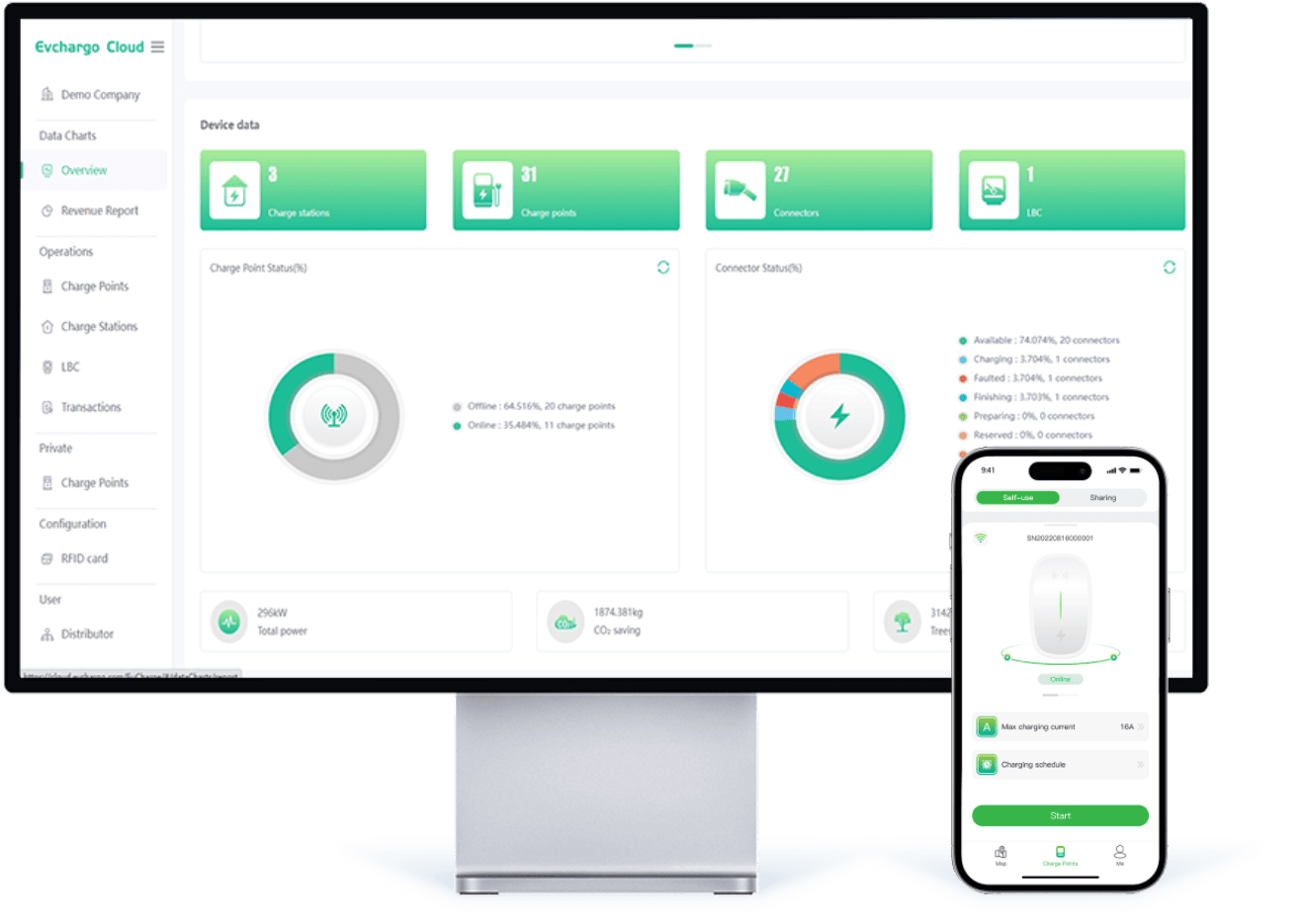
Platform scope
A project-specific operating layer for connected charging
Use the software discussion to define what the charger, site operator, users and external systems must exchange. Do not assume that every function is included with every charger.
Central management view
Review connected charging operations and project data through the configured cloud management interface.
User-facing access
Define the required mobile-client journey, supported user actions and market-specific language or account needs.
Interfaces and acceptance
Freeze charger compatibility, protocol versions, APIs, payment or authentication scope and acceptance evidence before deployment.
Specification checklist
Confirm these items before software is included in a quotation
The quotation should state the supported configuration rather than relying on a generic “smart charger” label.
| Decision area | Inputs to provide | Evidence to request |
|---|---|---|
| Chargers and protocol | Exact charger models, firmware and required protocol/version | Compatibility statement and test scope |
| Users and access | Driver, operator, distributor and administrator roles | Role and permission matrix |
| Authentication and payment | RFID, app, account, payment or private-fleet workflow | Supported flow and market boundary |
| Data and integration | Required API, reporting, data ownership and retention | Interface list and data-field definition |
| Hosting and networking | Region, connectivity, security and availability requirements | Hosting responsibility and network prerequisites |
| Acceptance and support | FAT/SAT cases, handover documents and support boundary | Acceptance plan and responsibility matrix |
Deployment path
Move from requirements to an accepted configuration
Timing depends on project scope, integrations, market requirements and the readiness of all parties.
Define the operating model
Document sites, users, chargers, transactions and responsible parties.
Freeze interfaces
Confirm protocols, versions, APIs, payment and authentication boundaries.
Configure and test
Test the agreed charger and software workflows against written cases.
Accept and hand over
Close exceptions and deliver accounts, documents and support responsibilities.
Is the cloud platform included with every charger?
Do not assume inclusion. Software, hosting, integration and support scope should be stated in the exact quotation.
Can the platform connect to third-party chargers or systems?
Compatibility depends on the exact hardware, protocol/version, interface and test scope. Provide the integration requirements for project review.
Which payment, authentication and reporting functions are supported?
These are destination- and project-specific. Define the required user journey, market, payment provider, reports and acceptance cases before confirmation.
Prepare a software RFQ
Send the charger list, site count, user roles and required interfaces
Include the destination market, network conditions, authentication/payment flow, data requirements, hosting preference and acceptance tests.