
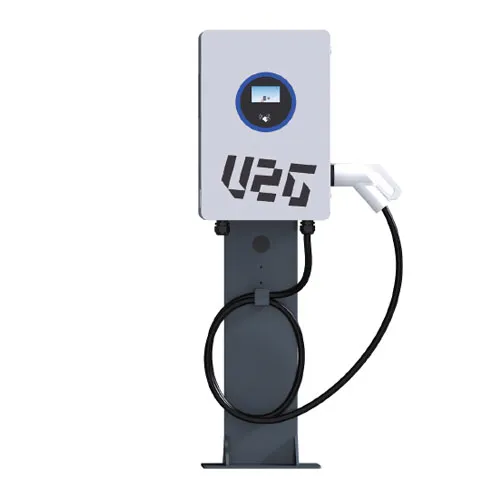
15–20 kW V2G V2L Bidirectional Charger
Quick answer: The HG Power 15–20 kW bidirectional charger can charge an EV and send its stored energy back to AC loads or the grid, where the vehicle and site allow it. The off-grid AC output is listed at 380, 400 or 415 Vac, so home backup needs a project check.
Application : buses, taxis, sanitation trucks, logistics vehicles,private cars.
- Bidirectional Energy Flow for Efficient Energy Utilization;
- Peak Shaving and Valley Filling to Reduce Electricity Costs;
- High Integration and Intelligent Control;
- Emergency Backup Power for Enhanced Reliability;
- Multi-Scenario Compatibility and Scalability;
SPECIFICATION
| Charger Capacity | 15–20 kW |
| Installation mode | Vertical |
| Input Voltage Range | 260~485Vac |
| Input voltage frequency | 50/60±5% |
| Output voltage range | 100~750VDC |
| Maximum output current | 0-73.3 A |
| DC input voltage range | 300~750VDC |
| DC input maximum current | 240A |
| AC output voltage range | 260VAC~485VAC |
| AC output frequency | 50/60±10% |
| AC off-grid voltage | 380Vac/400Vac/415Vac |
| Precision of output voltage regulation | ±1% |
| AC off-line frequency | 50/60Hz |
| Off-grid output voltage THDu | ≤2% |
| Display & Screen Size | 4.3 Inches Touch Screen with Shell |
| Charging mode | Automatic charge/fixed quantity/fixed amount/fixed time |
| Payment method | Payment by swipe card/Scan Code |
| Communication between EVSE and Central Server | OCPP 1.6 / OCPP 2.0.1 (Optional) |
| Interface between Charger and CMS | Ethernet/3G/4G/WIFI (Optional) |
| Executive Standard | IEC 62196 2017, IEC 61851 2017, SAE J1772,CHAdeMO etc. |
| Protection level | IP54 |
| Output Interface | CCS1/NACS/CCS2/CHAdeMO/GBT (Optional) |
Bidirectional operation depends on the vehicle, connector and local grid rules. Confirm your exact configuration before ordering.
What is the difference between V2G, V2L and V2H?
| Mode | Vehicle battery powers | Typical use |
|---|---|---|
| V2G | The grid | Fleet energy services, where the utility allows export |
| V2L | Connected loads | Off-grid or temporary AC supply |
| V2H | A building | Backup during a power outage |
Can it power a home during an outage?
It can be part of a V2H project, but the charger alone does not decide this. Check these four points first:
- Vehicle: it must allow DC discharge through its charging port. Many vehicles do not.
- Connector and protocol: charger and vehicle must support discharge on the same standard.
- Voltage: the off-grid output is three-phase 380, 400 or 415 Vac. A home on a lower-voltage or single-phase supply needs an engineered interface.
- Isolation: the home must disconnect from the grid during an outage, using equipment approved under local rules.
Send the vehicle model and home supply, and we will check whether this model fits before you plan around it.
Which vehicles and sites suit a 15–20 kW unit?
This rating suits a vehicle parked for hours, because 15–20 kW moves energy steadily, not quickly. For larger fleets and higher power, see the 30–240 kW bidirectional charger. Our V2G procurement guide covers what fleets and utilities should ask for, and our solar storage charging guide explains how storage fits into a site.
See the wider range on our DC chargers page.
Order terms
| Term | HG Power |
|---|---|
| Minimum order | 1 unit |
| Lead time | 30–35 days after full payment |
| Warranty | 2 years |
| Payment | T/T (bank transfer) |
Questions buyers ask
Is this a V2H charger?
It is a V2G and V2L bidirectional charger that can form part of a V2H project. Home backup depends on the vehicle allowing discharge, the home supply voltage and approved isolation equipment, so we check each project first.
Which electric cars can discharge through this charger?
Compatibility depends on the vehicle model and its charging protocol. Send your exact vehicle model and market, and we will confirm before you order.
Can I see a live demonstration?
Send your dates, vehicle type and the mode you want to see. We will confirm what can be demonstrated and whether a factory visit suits your schedule.
How much does a bidirectional charger cost?
We quote by configuration rather than publish one price. Connector type, cable length, payment terminal, OCPP version, quantity and destination all change the figure. Send those details with your preferred Incoterm, such as FOB China, and we will reply with a quotation.
Send your vehicle model, home or site supply and country, and we will check the fit.
Request a quoteTechnical review: Marvin Zhou. Reviewed 4 November 2026.