
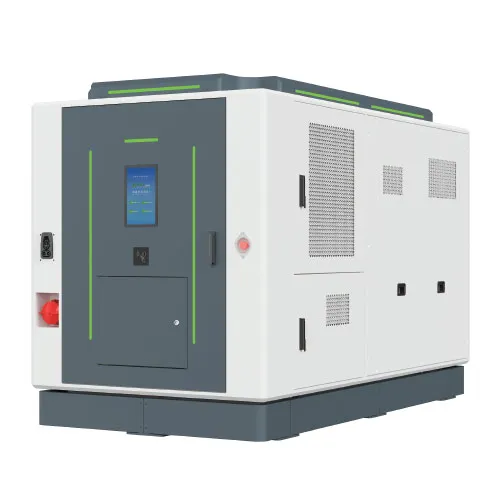
Transportable ESS Charger: 158–316 kWh Mobile EV Charging
Quick answer: The HG Power transportable ESS charger pairs a liquid-cooled LFP battery with a DC charger, so it can charge EVs where grid power is weak or missing. Models run from 158 kWh with 120 kW output to 316 kWh with 240 kW output, at 150–1000 Vdc with two connectors.
Application scenarios: Roadside assistance, emergency power backup, power repair
- Smart & High-Efficiency Control;
- Comprehensive Safety Protection;
- Cluster-Level Precision Management;
- Flexible Charging Modes;
- Modular & Easy Deployment;
SPECIFICATION
| Battery Type | LFP, liquid cooled (battery IP67) |
| Battery Voltage Range | 604.8–788.4 V |
| Charge / Discharge Rate | Under 1C (CYD158K-120); 1C (210 and 316 kWh models) |
| Depth of Discharge | 90% recommended |
| Cycle Life | More than 4,000 cycles |
| Output Voltage | 150–1000 Vdc |
| Output Current | 0–200 A (158 kWh model); 0–300 A (210 and 316 kWh models) |
| Connector Options | GB/T, CCS1, CCS2, CHAdeMO |
| AC Input / Output | 50 kW three-phase; 7 kW single-phase output |
| Display | 12.1-inch touch screen |
| Payment | Card, QR code |
| Network / Protocol | 4G; Hongjiali protocol or OCPP |
| Operating Temperature | -20 to 55°C |
| Relative Humidity | 5–95%, non-condensing |
| Altitude | 2000 m |
| Noise | 70 dB or less |
| Enclosure | IP54 |
Specifications come from HG Power CYD158K-120, CYD210K-180 and CYD316K-240 sheets. Some parameters can be adjusted for a project.
Which transportable ESS model fits your project?
| Model | Battery | DC output | Usable at 90% DoD | Size (L×W×H) | Weight |
|---|---|---|---|---|---|
| CYD158K-120 | 158 kWh | 120 kW | About 142 kWh | 2720 × 1400 × 1692 mm | 2,600 kg |
| CYD210K-180 | 210 kWh | 180 kW | About 189 kWh | Confirm in quotation | Confirm in quotation |
| CYD316K-240 | 316 kWh | 240 kW | About 284 kWh | 2800 × 1600 × 2200 mm | 4,000 kg |
Usable energy is our calculation from the recommended depth of discharge. A smaller 64 kWh, 50 kW model also appears in our product range, so ask if your project needs less.
Who uses a mobile charger with battery storage?
- Roadside assistance and emergency EV charging
- Sites where the grid cannot supply a high-power charger yet
- Temporary sites, events and construction phases
- Emergency power and power repair work
How many vehicles can it charge?
Divide usable energy by the energy each vehicle needs. At 52.5 kWh per session, the 158 kWh model gives about 2.7 sessions before recharging. Real results are lower after conversion losses.
How long does the battery take to recharge?
At the 50 kW three-phase AC input, 142 kWh takes at least 2.8 hours. This is simple arithmetic and excludes losses, so size your recharge window with margin. For fixed sites with solar, read our solar storage EV charging guide. You can also compare energy storage products and our DC fast chargers.
Order terms
| Term | HG Power |
|---|---|
| Minimum order | 1 unit |
| Lead time | 30–35 days after full payment |
| Warranty | 2 years |
| Payment | T/T (bank transfer) |
Questions buyers ask
Do you have a 100–120 kW charger with 100–150 kWh of battery?
The closest standard model is the CYD158K-120, with 120 kW output and a 158 kWh battery. At the recommended 90% depth of discharge, that is about 142 kWh usable. Some parameters can be adjusted for a project, so send your target figures.
Can you ship several units on FOB terms?
State the quantity, destination and Incoterm you want, such as FOB China, in your request. The minimum order is 1 unit, and we confirm shipping terms in the quotation.
Does it work on a 60 Hz grid?
The CYD158K-120 and CYD210K-180 sheets list 50/60 Hz. The CYD316K-240 sheet lists 50 Hz, so confirm this model for a 60 Hz market.
How much does a mobile EV charger with battery cost?
We quote by configuration rather than publish one price. Connector type, cable length, payment terminal, OCPP version, quantity and destination all change the figure. Send those details with your preferred Incoterm, such as FOB China, and we will reply with a quotation.
Send your power, energy and site needs, and we will match a model.
Request a quoteTechnical review: Marvin Zhou. Reviewed 4 November 2026.